


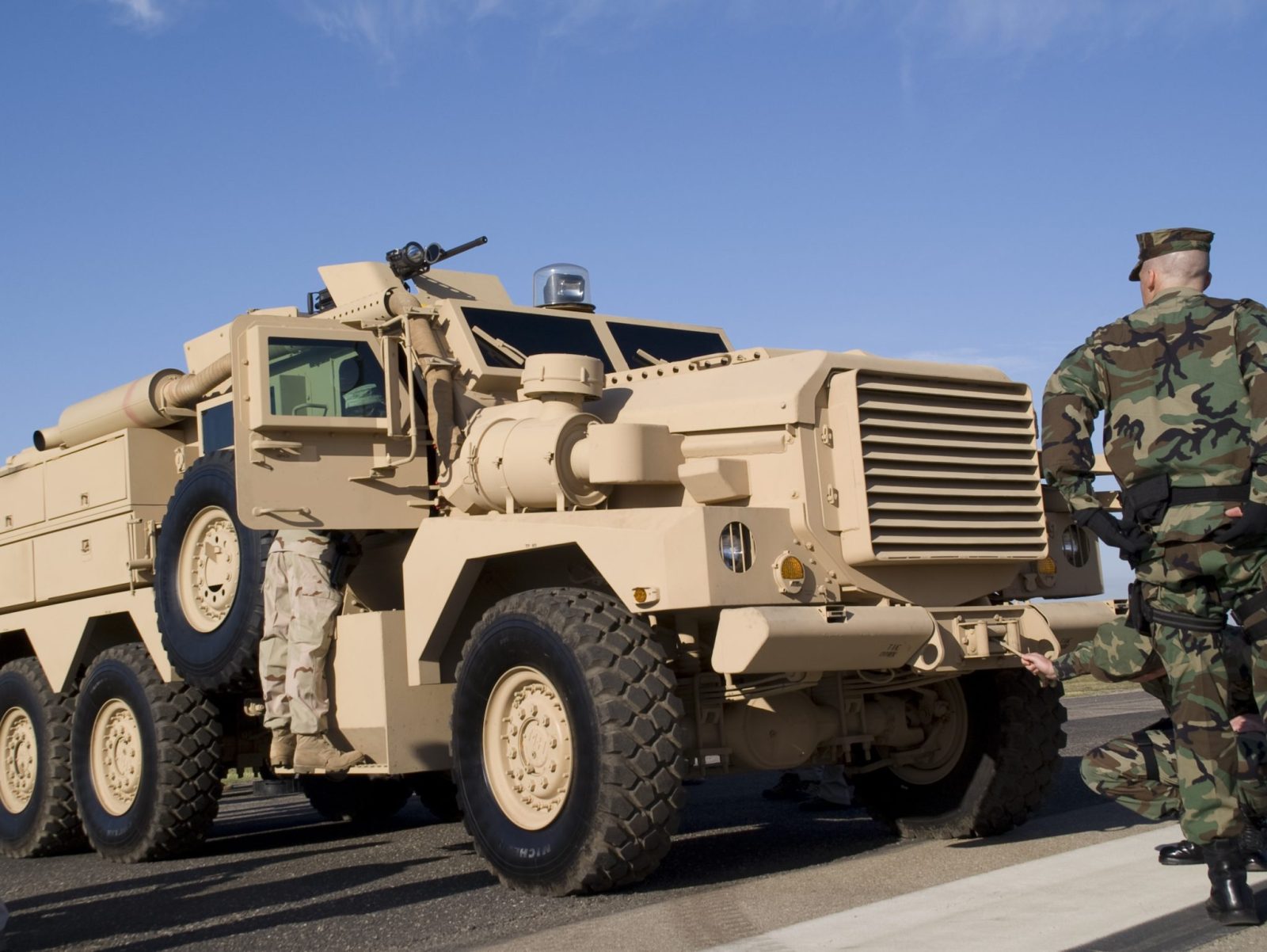
Mission-Critical Reliability for Military and Defense Vehicles Starts with Proven Testing
Reducing Risk and Improving Uptime Through Advanced Testing
For defense maintenance crews, vehicle rebuilders, OEMs, and system integrators, equipment failure isn’t just a maintenance issue, it’s an operational risk with real consequences.
A drivetrain that binds under load. An engine that loses power in extreme heat. A transmission that fails mid-mission.
These aren’t isolated problems, they’re failures that impact readiness, safety, and mission success.
The pressure is intensifying:
- Aging military fleets require more frequent rebuilds and validation
- Operational tempos are increasing, leaving less margin for error
- Maintenance windows are shrinking while expectations continue to rise
- Teams are being asked to do more with fewer resources
Yet many organizations still rely on inspection methods that don’t fully replicate real-world conditions.
The question isn’t whether to test—it’s whether your testing process gives you the confidence to deploy.
The Challenge: Failures Discovered Too Late
Military vehicles operate in environments that push components to their limits, continuous high-load cycles, extreme temperatures, dust, vibration, and unpredictable terrain.
But in many OEM, rebuild, and maintenance operations, there’s still a gap between inspection and true validation.
That gap shows up as:
- Drivetrains that pass inspection but fail under load
- Engines that meet spec but underperform in real conditions
- Rebuilt components deployed without full-load verification
For OEMs, generator packagers, integrators, rebuilders, and critical facility operators, this is where avoidable field failures originate when issues aren’t identified until equipment is already in operation, rather than being caught in the test cell.
The Solution: Real-World Validation Before Deployment
Power Test works with defense organizations, OEMs, and rebuild facilities to move testing upstream, so failures are identified and resolved before equipment is deployed.
This is not about selling a dynamometer. It’s about building a validation process that mirrors real-world operation and fits your workflow, throughput, and facility constraints.
To eliminate drivetrain failures before deployment
Cross drive dynamometer systems simulate the torque, load, and speed conditions that military transmissions, differentials, and drive systems experience in the field.
This allows teams to:
- Detect binding, leaks, and inefficiencies missed by inspection alone
- Validate rebuilt, repaired, or new drivetrains under full-load conditions
- Make deployment decisions backed by real performance data
To ensure engine performance under sustained stress
Water brake engine dynamometer systems enable high-load engine testing across production, rebuild, and maintenance environments.
This allows organizations to:
- Verify torque, horsepower, and efficiency under continuous load
- Identify performance issues before engines reach the field
- Standardize validation across high-volume workflows
Integrated controls, data acquisition, and reporting provide repeatable, documented validation, reducing reliance on subjective judgment and increasing confidence across teams.
The Outcomes: What This Means for Your Operation
Organizations that implement real-world validation testing see measurable improvements across their operation:
Fewer Field Failures: Issues are identified and resolved in the facility—not during operation
Lower Lifecycle Costs: Eliminate repeat repairs and reduce the cost of in-field failures
Faster, More Consistent Throughput: Standardized testing supports high-volume rebuild and production workflows
Stronger Deployment Confidence:Every engine and drivetrain is backed by performance data—not assumptions
Extended Equipment Life:Optimized performance reduces stress and wear over time
For rebuilders and integrators, this means confidence in every unit shipped.
For operators, it means equipment that performs when and where it matters most.
Why Now: The Cost of Getting It Wrong Is Increasing
Defense organizations are facing a convergence of challenges:
- Aging fleets requiring more frequent rebuild cycles
- Increased mission demands with less tolerance for downtime
- Supply chain constraints making replacement parts harder to source
- Greater accountability for readiness, safety, and cost control
At the same time, experienced labor is harder to find, making it riskier to rely on inspection alone.
Testing is no longer optional—it’s becoming the standard, repeatable way to ensure performance regardless of personnel, process variability, or operational pressure.
Organizations investing in validation capabilities now are positioning themselves to meet readiness demands, while those that don’t continue to absorb the cost of avoidable failures.
Why Power Test
Power Test brings more than equipment; we bring proven experience in mission-critical testing environments.
- Decades of industry expertise supporting defense, industrial, and OEM applications
- Thousands of dynamometer systems installed globally
- Trusted by OEMs, rebuild facilities, and operators who cannot afford failure
- Deep application knowledge across engines, drivetrains, and full-system validation
Our approach is consultative. We work alongside your team to design a solution aligned to your specific application, throughput requirements, and operational goals—not just deliver a piece of equipment.
Let’s Solve Your Testing Challenge
Every operation is different, space constraints, throughput demands, system complexity, and risk tolerance all play a role in defining the right solution.
The first step is understanding where your current process may be at risk.
Let’s start with a conversation.
We can help you:
- Evaluate your current testing and validation approach
- Identify gaps that could lead to field failures
- Define a right-fit solution aligned to your operation and goals
Connect with Power Test to build a testing strategy that ensures your equipment is truly mission-ready—before it reaches the field.
Contact a Specialist Today.